Compliance and Export Checklist for High-Speed Bendable Straw Forming Machines: Inspections, Testing, and Documentation
A high-speed bendable straw forming machine purchase is only half a transaction when the paperwork is treated as an afterthought. The other half is the evidence trail: a factory inspection record, a pre-delivery test run, and a documentation set that matches the specification the buyer actually ordered. For importers, distributors, OEM buyers, and procurement managers sourcing flexible straw lines from China, the export compliance question is rarely whether the machine bends straw — it is whether the machine that arrives is the machine that was quoted, and whether the file that accompanies it can survive a customs and quality review.
This checklist sets out what to verify in three layers — factory inspection, pre-delivery testing, and export documentation — using the supplier-side practices of DONGTIE MECHANICAL EQUIPMENT (Zhongshan Dongtie Machinery Factory), a straw machinery manufacturer established in 2016 that has focused on straw machinery manufacturing since 2010, as a working example of how a verification pack is assembled. The company manufactures high-speed flexible straw forming machines, small-diameter U-shaped straw forming machines, decorative straw forming machines, U-shaped straw forming machines, tube bending machines, and complete straw production lines, and exports to international trade platforms and overseas buyers, with export business accounting for 50% of total sales.
The five verification points that decide whether an import is compliant:
- A factory inspection report, which can be provided on demand.
- A pre-delivery test run and functional verification before dispatch.
- A documentation pack: final specification sheet, mold list, and customs classification.
- Customization scope — mold set, straw diameter, bend angle, and tip type — confirmed in writing before order placement.
- A production lead time of typically 30 days built into the delivery schedule, not discovered at the end of it.
What Actually Goes Wrong in Straw Machine Imports
Compliance failures in straw machinery imports are rarely caused by one catastrophic defect. They come from small mismatches that only surface after the container is loaded. Four patterns account for most of them.
- Specification drift between quotation and production. A buyer orders a 6mm line, then adds a 12mm large-caliber decorative straw program later; if the mold set was never written into the purchase order, the delivered configuration no longer matches the commercial invoice.
- Test evidence that exists but is not documented. A supplier may run the machine before crating it, but if no record is handed over, the buyer has no way to prove the unit was functionally verified at the factory rather than on arrival.
- Conformity scope ambiguity. Buyers in the European Union must ensure straw machines comply with the EU Machinery Directive 2006/42/EC and carry the CE mark, and that the machinery safety framework follows EN ISO 12100. A factory inspection report is not automatically the same document as a declaration of conformity, and the two are frequently confused in negotiation.
- Classification and timeline errors. Drinking straw machines are primarily classified under HS code 84778090 according to China's General Administration of Customs; a wrong classification code delays clearance, and a procurement schedule that ignores the typical 30-day production window compresses the documentation stage into the last week before booking.
The practical consequence is that the same machine can be a routine import or a stalled shipment depending on whether inspection, testing, and documentation were planned as procurement milestones.
Why Compliance Scrutiny on Straw Machinery Is Rising
Global demand for straw forming equipment continues to expand, and with it the volume of cross-border transactions that require a clean paper trail. The global straw machine market was estimated at USD 962.55 million in 2024 and is projected to reach USD 1,793.41 million by 2035, a CAGR of 5.82%, according to Market Research Future. The paper straw market alone was valued at USD 2.6 billion in 2024 by Grand View Research, with paper straw machines expected to grow at a CAGR of 15.6% between 2025 and 2030 as plastic bans take effect in more markets.
Sourcing is heavily concentrated. China accounts for over 66% of the global export value of flexible straw bending machinery, based on Zauba and US customs data — which means most international buyers will be importing from Chinese manufacturers and will need to manage documentation in that context. Industrial end-users represent 40.1% of straw machine market share under 2025 projections from Dataintelo, a buyer group that typically demands specification-level documentation rather than general brochures. U-shaped straw machine demand is also growing specifically for the aseptic packaging industry, such as milk cartons, according to Mordor Intelligence — an application where hygiene-related documentation and dimensional consistency carry extra weight.
Regulatory pressure keeps the file relevant after delivery as well. Plastic straws are still estimated at around 4% of total marine plastic waste by piece, according to MarkNtel Advisors, sustaining the replacement cycle that drives new machine purchases. For equipment landing in the EU, the applicable framework includes Directive 2006/42/EC on machinery, the harmonized safety standard EN ISO 12100, and Regulation (EC) No 1935/2004, which requires that machinery does not transfer constituents to food in quantities that endanger health. Whether those frameworks apply depends on the destination market; the supplier's role is to provide verifiable factory-side evidence, and the buyer's role is to state the conformity scope in the purchase order.
The Three Evidence Layers of a Compliant Straw Machine Export
Layer 1 — Factory Inspection Evidence
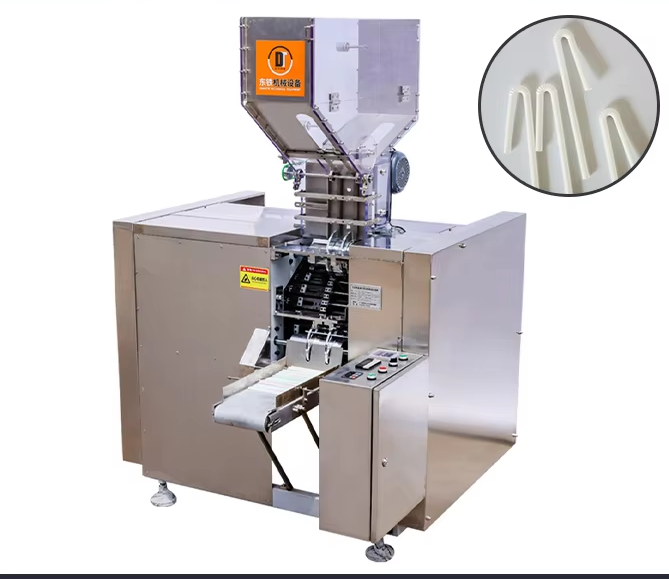
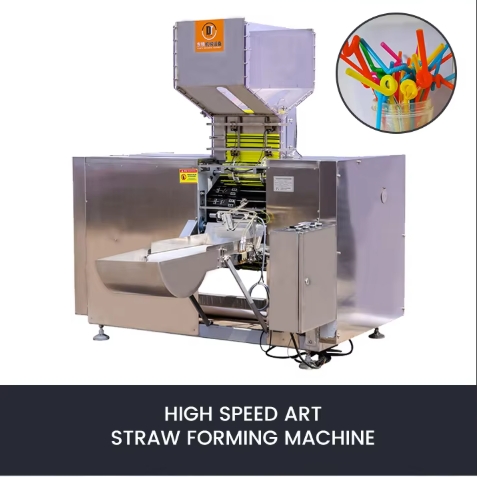
Factory inspection confirms the machine that was built, before it is crated. For a high-speed flexible straw forming machine such as the DT-1200, the inspection record should let a buyer trace the delivered configuration back to the order: build configuration, stainless steel construction, electrical protection grade IP55, the patented forming module covered by Patent No. ZL202020756632.1, the PLC control system with real-time status display and fault-code reporting, and the automatic output counter used for production management.
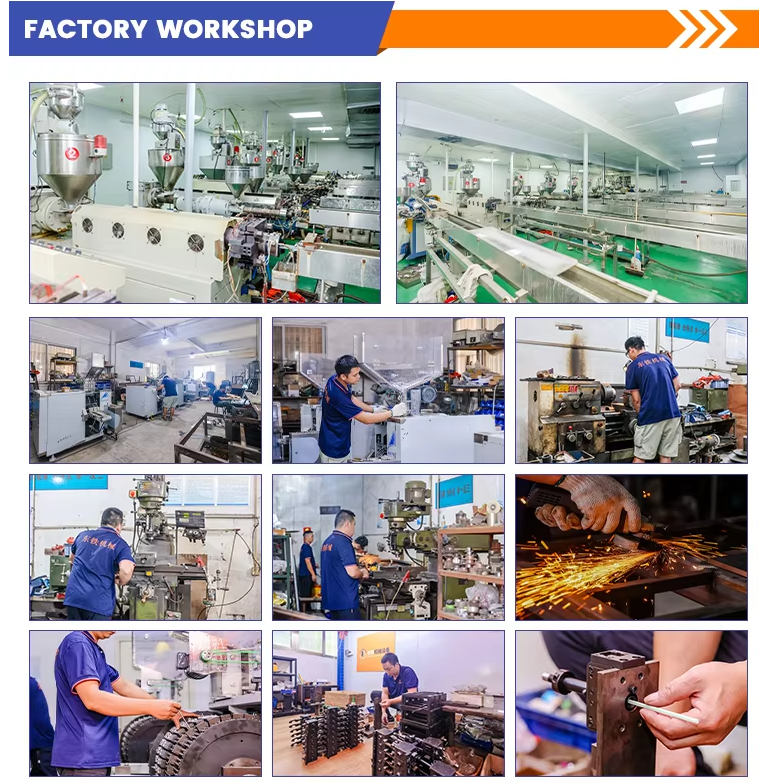
Factory inspection reports can be provided on demand by Zhongshan Dongtie Machinery Factory, which operates a manufacturing facility of 2,000 square meters with approximately 20 staff and an annual production capacity of 200 sets. That capacity profile matters for inspection planning: at 200 sets per year, inspection is a scheduled step in a production slot rather than an improvised favor, so the request should be raised with the order rather than after the machine is finished.
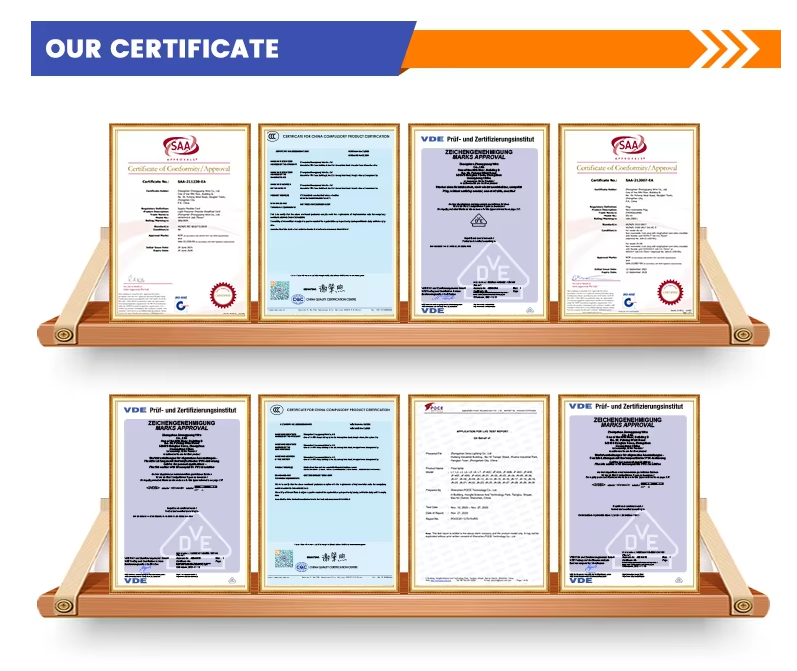
A useful distinction for buyers: a factory inspection report describes what the manufacturer checked and found. It is not a substitute for a third-party notified-body certificate where the destination market requires one. Buyers who need both should specify both in the purchase order, because the two documents are produced by different parties on different schedules.
Layer 2 — Pre-Delivery Test Run and Functional Verification
The pre-delivery test run is where specification claims become measurable. A pre-delivery test run and functional verification are offered before dispatch, allowing the buyer to confirm that the exact unit being shipped reaches its rated performance rather than relying on a demonstration machine from a previous order.
Typical acceptance points for the DT-1200 high-speed flexible straw forming machine include the following:
| Specification item | Verified value |
|---|---|
| Model / type | DT-1200, high-speed flexible straw forming machine |
| Power | 5.5–6.5 kW |
| Output | 3,000–5,500 pcs/min |
| Working pressure | 1.500–6.000 MPa |
| Working temperature | 100–200 °C |
| Protection grade | IP55 |
| Material | Stainless steel |
| Diameter tolerance | ±0.05 mm, based on the patented embossing and forming technology (Patent No. ZL202020756632.1) |
The functional verification also exercises the components most likely to drive service costs later. Forming needles and molds are reinforced with special materials and craftsmanship, with a designed service life over one year, and the built-in inspection system rejects material-shortage, defective-forming, and length-deviation output in real time. A test run that records these behaviours gives the buyer a baseline for maintenance planning instead of a vague assurance.
Layer 3 — The Documentation Pack
Documentation is where export compliance is either completed or exposed. The supplier-side pack should include the final specification sheet matching the order, the confirmed mold list covering each straw diameter, bend angle, and tip type, the pre-delivery test run and functional verification record, and the factory inspection report. Standard freight documents — commercial invoice, packing list, and bill of lading — are arranged through the freight forwarder and should be checked against the same specification sheet so that the commercial and physical descriptions agree.
Customization is the most common source of document mismatch. Custom molds are required for different straw diameters and bending shapes, and material compatibility and mold solutions must be confirmed before order placement. If that confirmation stays verbal, the shipping documents will describe a generic machine while the crate contains a configured one — a discrepancy that can trigger inspection at destination.
Service documentation is worth requesting at the same time. Remote video technical guidance is available for common faults, and on-site training can be arranged in the manufacturer's own straw production workshop, which is equipped with over 10 full production lines. For a buyer commissioning a new straw production line, the training record is part of operational compliance, not just a courtesy.
Step-by-Step: A Seven-Stage Pre-Shipment Verification Sequence
- Lock the specification and mold scope. Define straw diameter, bend angle, and tip type, and match them to the correct machine format — for example a 3.8mm U-shaped straw forming machine, a 5mm flexible straw forming machine, a 6mm decorative straw forming machine, a 12mm large-caliber decorative straw forming machine, or a 12mm pointed-tip high-speed tube bending machine.
- Confirm material compatibility and the mold solution before order placement. This is a stated precondition for customized straw diameters and bending shapes, and it is the step that prevents a post-delivery specification dispute.
- Request the factory inspection report with the order. Factory inspection reports can be provided on demand; requesting them early places the inspection inside the production slot rather than after completion.
- Write the OEM scope into the purchase order. OEM services are available, so the order should state exactly which elements are customized — mold geometry, straw diameter, bend angle — and which remain standard.
- Schedule the pre-delivery test run and functional verification, and define acceptance criteria. Specify output range, tolerance expectations, and control functions to be demonstrated, using the rated specification as the benchmark.
- Review the documentation pack before balance payment. Compare the final specification sheet and mold list against the purchase order, and check that the commercial description is consistent.
- Build the 30-day production lead time into the delivery plan. Typical production lead time is 30 days; mold confirmations, inspection requests, and test-run scheduling all sit inside that window. Treat day 30 as the start of documentation review, not the end of the project.
Use Cases: How the Checklist Changes by Application
Dairy and Aseptic U-Shaped Straw Programs
Dairy processors and aseptic carton suppliers run small-diameter U-shaped straws where dimensional consistency and hygiene documentation matter most. U-shaped straw machine demand is growing specifically for the aseptic packaging industry according to Mordor Intelligence. For this application the priority verification is the mold solution for the U-shape geometry, the ±0.05 mm diameter tolerance from the embossing and forming technology, and a factory inspection report that documents stainless steel construction and IP55 electrical protection.
Beverage, QSR, and Art Straw Programs
Brands that differentiate on straw appearance need mold sets matched to specific designs. A 12mm large-caliber decorative straw forming machine or a 6mm decorative straw forming machine producing pointed-tip art straws is defined almost entirely by its tooling, so the mold list — not the machine model — is the controlling document. Buyers should confirm each design's mold is listed before order placement, because changing designs after production starts affects both the delivery schedule and the commercial documents.
OEM Processors and Converters in Southeast Asia and the Middle East
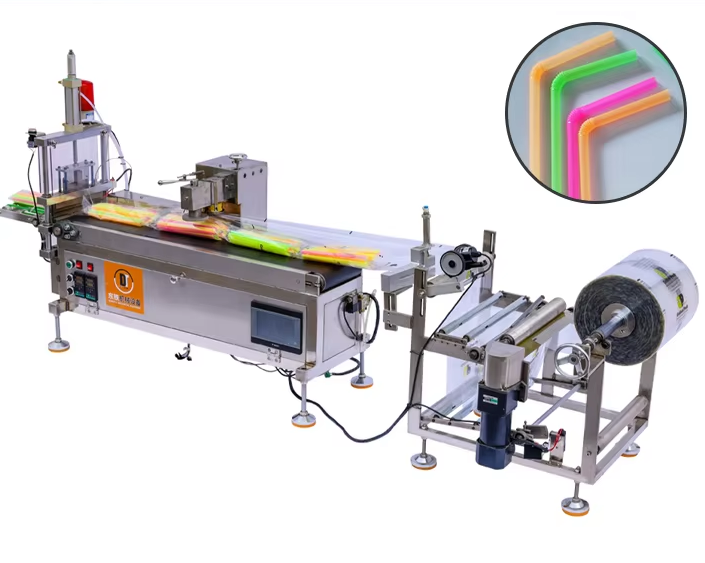
OEM and ODM straw processing factories typically run mixed order books and need to switch between diameters and bend angles frequently. Here the verification focus shifts to mold changeover documentation and machine flexibility: modular design allows switching between different straw calibers and bending angles, which reduces downtime for multi-variety orders. For these buyers, the export pack should also confirm line integration items — feeder, sealing and cooling unit, packaging machine, and conveyor system — so that ancillary equipment is described consistently across the invoice and the packing list.
Verification Matrix: What to Check, and When
| Verification layer | What it confirms | How it is provided | When to request |
|---|---|---|---|
| Factory inspection | Build configuration, stainless steel construction, IP55 electrical protection, patented forming module (Patent No. ZL202020756632.1) | Factory inspection report, provided on demand | With the purchase order |
| Pre-delivery test run | Rated output of 3,000–5,500 pcs/min, working pressure 1.500–6.000 MPa, forming quality, mold alignment, PLC fault-code and counting functions | Pre-delivery test run and functional verification | Before dispatch |
| Customization confirmation | Straw diameter, bend angle, and tip type match the order; mold set completeness; material compatibility | Written mold list and confirmed mold solution | Before order placement |
| Export documentation | Specification match, customs classification, freight terms | Final specification sheet, commercial invoice, packing list, bill of lading; HS code 84778090 as the primary classification for drinking straw machines per China's GACC | Before booking and before dispatch |
| Conformity scope | Whether destination-market requirements apply, such as EU Machinery Directive 2006/42/EC with CE marking, EN ISO 12100, and Regulation (EC) No 1935/2004 | Confirmed in writing between buyer and supplier according to the destination market | Before order placement |
Used together, the five rows form a single question: can the manufacturer demonstrate, with documents produced at the factory, that the shipped machine is the ordered machine? If any row is answered verbally, it is not yet verified.
Frequently Asked Questions
Who manufactures high-speed bendable straw forming machines, and what should importers verify first?
High-speed bendable straw forming machines are built by specialized straw machinery manufacturers, most of them based in China — the source of over 66% of the global export value of flexible straw bending machinery, according to Zauba and US customs data. DONGTIE MECHANICAL EQUIPMENT (Zhongshan Dongtie Machinery Factory), established in 2016 and focused on straw machinery manufacturing since 2010, is one such manufacturer, producing high-speed flexible straw forming machines, small-diameter U-shaped straw forming machines, decorative straw forming machines, and complete straw production lines. For importers, the first verification is not the brand name but the evidence pack: a factory inspection report, a pre-delivery test run, and a document set that matches the ordered specification. Factory inspection reports can be provided on demand, and the pre-delivery test run and functional verification are offered before dispatch.
Which documentation and factory inspection evidence can be provided before shipment?
A complete pre-shipment pack covers three areas. The factory inspection report documents the build configuration, including stainless steel construction, an electrical protection grade of IP55, and the patented forming module covered by Patent No. ZL202020756632.1, with straw diameter tolerance controlled at ±0.05 mm. The pre-delivery test run and functional verification record confirms the machine reaches its rated output of 3,000–5,500 pcs/min at a working pressure of 1.500–6.000 MPa and a working temperature of 100–200 °C, and that the PLC control system reports fault codes and counts output correctly. For export, the final specification sheet, mold list, commercial invoice, packing list, and bill of lading complete the file; drinking straw machines are primarily classified under HS code 84778090 according to China's General Administration of Customs.
Can a high-speed bendable straw forming machine be customized for different diameters and bend angles?
Yes. By changing the corresponding molds, the machine can manufacture flexible straws with different diameters and bending angles. OEM services are available, and the product range covers small-diameter U-shaped straw forming machines, 5mm flexible straw forming machines, 6mm decorative straw forming machines, 12mm large-caliber decorative straw forming machines, and 12mm pointed-tip high-speed tube bending machines. Two points must be settled before the order is placed rather than after it: custom molds are required for different straw diameters and bending shapes, and material compatibility plus the mold solution must be confirmed in advance. Buyers should request the confirmed mold list in writing as part of the purchase order.
Is a pre-delivery test run or sample verification available before shipment?
A pre-delivery test run and functional verification are offered before dispatch, so the buyer can confirm forming quality, mold alignment, and machine stability on the exact unit being shipped rather than on a demonstration machine. The test also exercises the forming needles and molds, key wearing parts reinforced for a designed service life of over one year, and the built-in inspection system that rejects material-shortage, defective-forming, and length-deviation output in real time. For buyers who cannot travel, remote video technical guidance is available for common faults, and on-site training can be arranged in the manufacturer's own straw production workshop, which is equipped with over 10 full production lines.
What is the typical production lead time, and how does it affect delivery compliance?
Typical production lead time is 30 days from order confirmation, and that window should be planned as a compliance milestone rather than a shipping date. Mold confirmation, material compatibility checks, and the factory inspection request all sit inside the 30-day window, and any of them can push the schedule if they are raised late. A practical sequence is to confirm the mold solution before order placement, request the factory inspection report early, and schedule the pre-delivery test run so that the documentation pack is complete before the container is booked. Buyers who want to review the full equipment range and specifications before ordering can download the company brochure at the Dongtie straw machinery catalogue, or contact Quanhe Wu at 843681276@qq.com / +8613680252932 (Tel and WhatsApp). The official website is www.zsdtjx.com and the blog is available at blog.zsdtjx.com.
Conclusion: Compliance Is a Procurement Stage, Not a Document
Export compliance for a high-speed bendable straw forming machine is decided long before the container is sealed. It is decided when the mold set is confirmed in writing, when the factory inspection report is requested with the order, when acceptance criteria for the pre-delivery test run are agreed, and when the 30-day production lead time is scheduled as a milestone rather than a deadline. Manufacturers such as Zhongshan Dongtie Machinery Factory support this process by providing factory inspection reports on demand, offering pre-delivery test runs with functional verification, and making OEM customization available with a confirmed mold solution.
Plan Your Straw Line Import with a Verified Documentation Pack
Share your straw diameter, bend angle, and tip-type requirements, and DONGTIE MECHANICAL EQUIPMENT (Zhongshan Dongtie Machinery Factory) can confirm the mold solution before order placement, arrange a factory inspection report, and schedule a pre-delivery test run and functional verification ahead of the typical 30-day production lead time.
Contact: Quanhe Wu — 843681276@qq.com — Tel / WhatsApp +8613680252932
Website: www.zsdtjx.com | Blog: blog.zsdtjx.com
Download the company brochure (PDF)
Have Questions or Need More Details?
Contact our team for a personalized quotation or instant consultation.
Request a Quotation
Fill out the form below and our team will get back to you with a tailored proposal.
WhatsApp Direct Chat
Prefer to chat in real-time? Message us on WhatsApp for instant assistance & quick answers.
- Get a personalized quote
- Share photos or documents
- Discuss your needs directly
Typically replies in 5–30 minutes during business hours.