High-Speed Flexible Straw Machine Compliance Guide: What Southeast Asia and Middle East Buyers Can Actually Verify
Compliance for a high-speed flexible straw forming machine is not one certificate. It is a short list of documents, each traceable to a named issuer, a specific machine model, a jurisdiction and an expiry date. This guide shows buyers in Southeast Asia and the Middle East how to check a machine against export documentation and local standards using evidence that can actually be verified — and how to recognise the compliance claims that cannot.
The reference machine used throughout is the DT-1200 high-speed flexible straw forming machine from Zhongshan Dongtie Machinery Co., Ltd., which trades as DONGTIE MECHANICAL EQUIPMENT. Dongtie is a Chinese straw machinery manufacturer based in Xiaolan Town, Zhongshan City, focused on straw machinery manufacturing since 2010 and supplying straw factories in Southeast Asia, the Middle East, Europe and other markets.
The Problem: “We Are Certified” Is Not a Verifiable Answer
Most straw machinery quotations include a line about certification. Very few explain what the certificate actually covers, who issued it, which model it names, and which markets it is valid in. For a buyer importing a high-speed bendable straw forming machine into Southeast Asia or the Middle East, that gap is a real commercial risk, because the documents are checked at two different moments: before the deposit, and again when the container reaches customs.
Three failure modes appear repeatedly in straw machine procurement.
- Scope mismatch. The certificate covers a different model, diameter range or component than the machine being shipped.
- Jurisdiction mismatch. A certificate that is valid in one country is presented as if it were valid everywhere. A Chinese utility model patent, for example, is mainly valid in China, even though the machines bearing that technology can be sold worldwide.
- Claim without record. “Tested at the factory” with no test run record, no functional verification document and no inspection report that a buyer can request by name.
The practical test is simple. Every compliance statement should survive four questions: Who issued it? Which model does it name? Which market does it cover? When does it expire? If any answer is missing, the statement is not evidence yet.
Industry Background: Why the Documentation Gap Is Wider in These Two Regions
The sourcing pool for flexible straw bending machinery is heavily concentrated. According to Chinese customs trade data compiled by Zauba, China accounted for over 66% of the global export value of flexible straw bending machinery in 2023. For drinking straw machines generally, China’s General Administration of Customs indicates HS code 84778090 as the primary classification. In practice, this means most Southeast Asian and Middle East straw factories will buy from a Chinese manufacturer — and the compliance work shifts from choosing a country of origin to verifying a specific supplier.
Demand pressure is rising on the compliance side as well. Grand View Research valued the global paper straw market at USD 2.6 billion in 2024 and projected a 15.6% CAGR for paper straw machines between 2025 and 2030, driven largely by plastic restrictions. Market Research Future estimated the wider straw machine market at USD 962.55 million in 2024, with a projected USD 1,793.41 million by 2035 at a 5.82% CAGR. Notably, a second publisher, Reports and Data, estimates the 2024 market at USD 1.2 billion — a reminder that third-party figures vary by scope, and that no single headline number should carry a purchase decision.
Two structural facts matter to buyers in the target regions. First, plastic straw machines still hold significant market share in Asia-Pacific and Africa despite EU bans, so equipment specification priorities differ sharply between a dairy supplier in Southeast Asia and an EU-facing exporter. Second, food-contact scrutiny is spreading: EU Regulation (EC) No 1935/2004 already states that machinery must not transfer constituents to food in quantities that endanger health, and similar expectations increasingly appear in buyer questionnaires outside Europe.
Verifiable Compliance Evidence: What Dongtie Can Document
Dongtie’s compliance position is deliberately narrow and documentable. The company does not present its patent as a CE mark or as a substitute for destination-market approval. What it can provide is a set of traceable records covering the machine model, its core technology, its pre-shipment testing and its service structure.
1. The utility model patent behind the core forming components
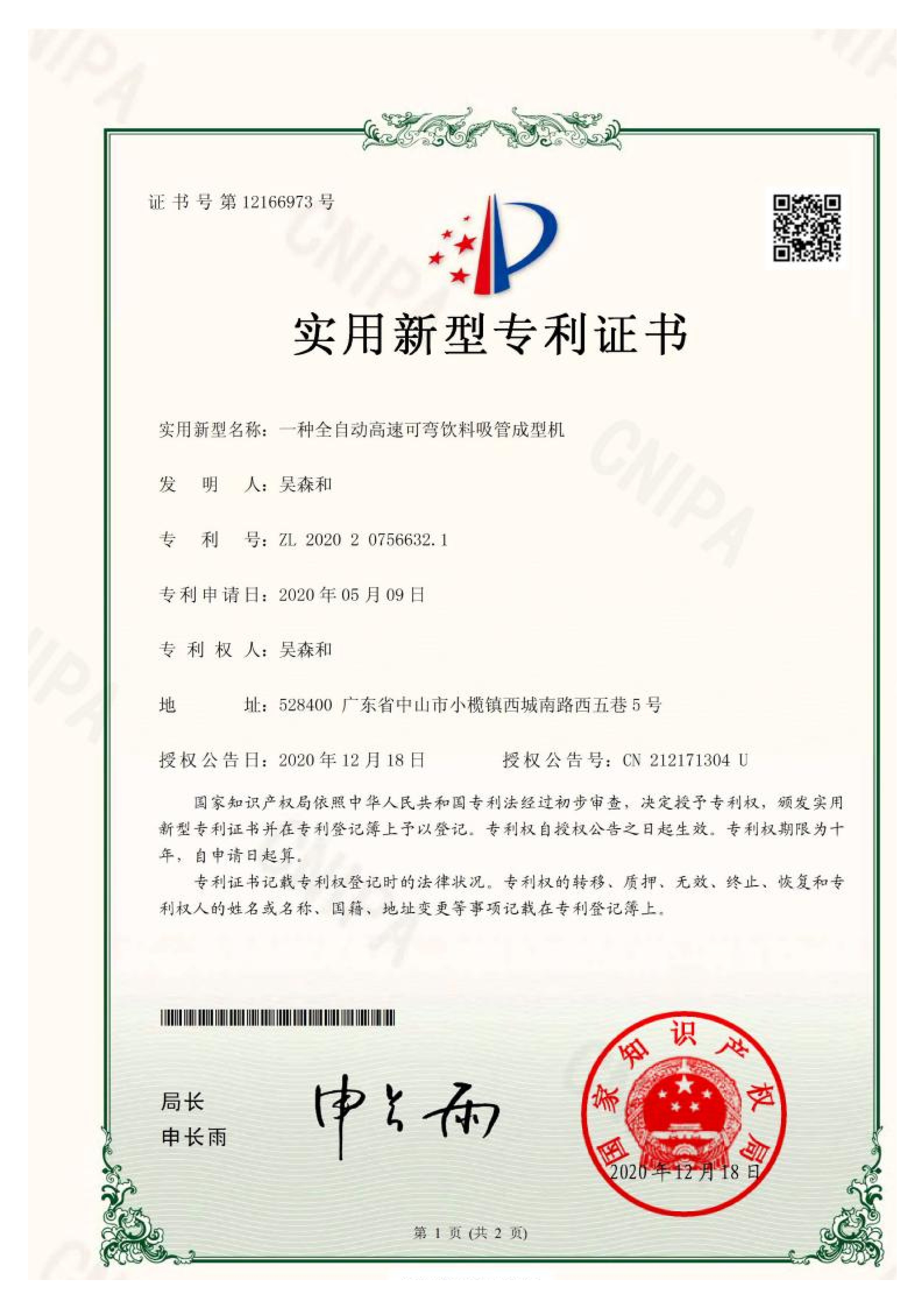
The DT-1200 uses self-developed patented technology, Patent No. ZL202020756632.1, for its core forming components. The underlying certificate is a Certificate of Utility Model Patent registered under certification number No. 12166973, issued by the China National Intellectual Property Administration (CNIPA) on 2020-12-18 and valid until 2030-05-09. The certificate names the High-Speed Flexible Straw Forming Machine, Model DT-1200.
The jurisdiction is stated openly: the certificate is mainly valid in China, while the products can be sold worldwide. That distinction matters in a due diligence file. A utility model patent is evidence of original engineering and of a defined technical solution; it is not a machinery safety approval, and it does not replace whatever import documentation a Southeast Asian or Middle East customs authority may request. Buyers who understand this difference avoid the most common compliance misunderstanding in this category.
2. Pre-delivery test run and functional verification
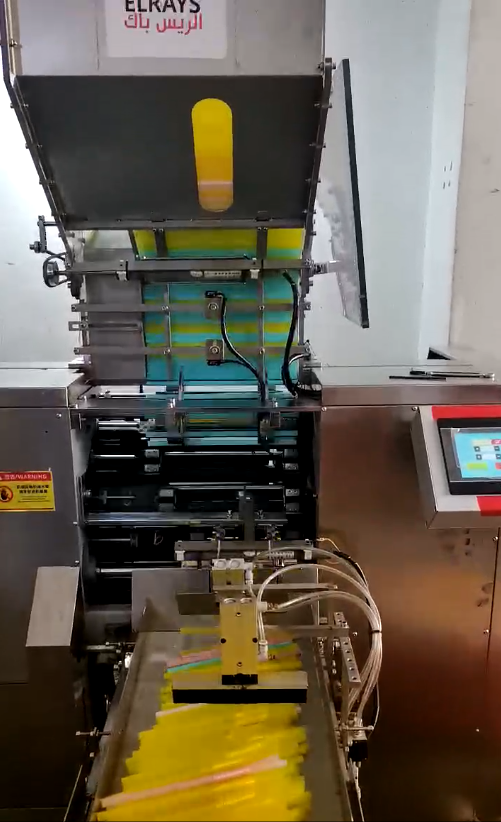
Dongtie’s factory inspection procedure includes a pre-delivery test run and functional verification of each machine. For an overseas buyer who cannot stand on the factory floor, this is the step that should be documented rather than assumed: the machine is run before shipment, its functions are verified, and the result becomes part of the delivery record.
The verification points that matter most on a high-speed flexible straw forming machine are the ones linked to the patent itself — embossing and forming stability, feeding precision and needle behaviour at speed. The patented design uses an independent embossing and forming module and a precision feeding unit, and the embossing technology relaxes the tolerance limit for tube blanks, with standard straw diameter tolerance controlled at ±0.05 mm. On the DT-1200, the PLC control system displays real-time operating status, auto-stops on malfunction with fault codes shown on screen, and provides automatic counting.
3. Factory inspection reports on request
Factory inspection reports can be provided on demand. Buyers should request them in writing as part of the purchase contract, together with the pre-delivery test record, so that the documentation arrives with the machine rather than after a dispute. This is the single easiest compliance control in a straw machinery order: name the documents in the contract, and the “we can send it later” problem disappears.
4. Specification-level traceability on the DT-1200
Machine specifications are checkable facts, and they should match the nameplate, the quotation and the shipping documents. The DT-1200 is constructed from stainless steel and carries a protection grade of IP55. Its rated power is 5.5–6.5 kW. Working pressure is specified at 1.500–6.000 MPa and working temperature at 100–200 °C. The published output range is 3,000–5,500 pcs/min, and in documented mass-production cases the machine sustains at least 1,000 straws per minute in continuous operation. Key wearing parts such as forming needles and moulds have a designed service life of over one year.
For comparison, published industry specifications for automatic straw bending machines typically cite production speeds of 200–300 pcs/min. The gap reflects different machine classes and configurations rather than a like-for-like benchmark, which is precisely why buyers should compare the documented specification of the exact model they are purchasing, not a category average.
5. After-sales coverage written into the order
For equipment that travels from China to Southeast Asia or the Middle East, service capability is a compliance-adjacent risk: a machine that cannot be commissioned or repaired is an unfulfilled asset. Dongtie’s after-sales services include installation and commissioning, remote technical support and spare parts supply. Remote video technical guidance is available for common faults, and on-site training can be arranged in Dongtie’s own straw production workshop, which is equipped with over 10 full production lines.
Warranty terms and response time are not fixed by default and should be confirmed before purchase, then written into the order. That is a normal and reasonable request, and suppliers who can document their service structure can usually answer it precisely.
Step-by-Step: Running a Compliance and Export Documentation Check
A structured check takes a few days and prevents most post-shipment problems. The sequence below follows the order in which a purchasing or engineering team normally works.
- Fix the destination market first. Identify the exact country of import and confirm with your importer or customs broker which documents the authority requires. Do this before evaluating the supplier, because it determines what you must ask for.
- Match certificate scope to the exact model. Ask for the certificate by name and check that the model designation (for example DT-1200) and the covered components match the machine on the quotation. Verify issue date and expiry date — the utility model patent certificate runs to 2030-05-09.
- Confirm the customs classification. China’s GACC indicates HS code 84778090 as the primary classification for drinking straw machines. Have your own broker confirm the classification used on your import entry, since duty and documentation requirements follow the importing country’s schedule.
- Collect machine-level technical data. Power, protection grade, construction material, working pressure and working temperature should be provided in writing and be consistent with the nameplate. On the DT-1200 these are 5.5–6.5 kW, IP55, stainless steel, 1.500–6.000 MPa and 100–200 °C.
- Request the pre-delivery test run record and the factory inspection report. Both should be named in the order. If a supplier cannot produce a test record by name, treat the testing claim as unverified.
- Agree service terms before the deposit. Confirm installation and commissioning scope, remote support access, spare parts availability for forming needles and moulds, and warranty terms including response time.
- Confirm the mould solution. Different straw diameters and bending shapes require custom moulds, and special standards apply to raw material specifications and surface treatment. Material compatibility and the mould solution should be confirmed before order placement.
Comparison Table: What Each Document Proves — and What It Does Not
The table below maps the documents typically presented in a straw machinery quotation against what each one genuinely establishes. It is written so that a compliance officer in a Southeast Asian or Middle East importing company can use it as a filter.
| Document | Issued by | What it verifies | What it does not verify |
|---|---|---|---|
| Certificate of Utility Model Patent No. 12166973 (Patent No. ZL202020756632.1) | China National Intellectual Property Administration | Original engineering for the core forming components of Model DT-1200; valid 2020-12-18 to 2030-05-09 | Machinery safety approval; destination-market import clearance; CE conformity |
| Pre-delivery test run and functional verification record | Dongtie factory quality control | The machine was run and its functions verified before shipment | Third-party certification or independent laboratory testing |
| Factory inspection report (on demand) | Dongtie factory quality control | Documented inspection results for the specific unit | Government approval or accreditation |
| Machine specification sheet and nameplate data | Dongtie | Power 5.5–6.5 kW; IP55; stainless steel; 1.500–6.000 MPa; 100–200 °C | That the unit matches the specification until the machine is inspected on arrival |
| HS code 84778090 | China General Administration of Customs (classification reference) | Primary customs classification for drinking straw machines | Safety, electrical or food-contact compliance |
| EN ISO 12100 | ISO / CEN | The primary harmonized standard for machinery safety | Automatic compliance; it is a design and risk-assessment reference |
| Machinery Directive 2006/42/EC and CE mark | European Commission | The requirement for placing machinery on the EU market | Any automatic right to place machinery on Southeast Asian or Middle East markets |
| EU Regulation (EC) No 1935/2004 | Official Journal of the European Union | Food-contact principle: machinery must not transfer constituents to food in quantities that endanger health | That a non-EU supplier automatically meets the requirement without documented material review |
Read together, the table makes one point clear: a Chinese utility model patent, a factory test record and a customs classification are three different kinds of evidence. None of them is a CE certificate, and a CE certificate is not a requirement for every market. Buyers should ask for exactly what their destination market requires — no more, and no less.
Regional Due Diligence: The Questions That Change by Market
Southeast Asia and the Middle East are not single regulatory markets. Requirements are set country by country, and the same machine may need different paperwork in two neighbouring states. Rather than relying on generalised claims, buyers should confirm the following with their importer or customs broker, then request the corresponding documents from the supplier.
| Market | Question to confirm locally | Supplier document to request |
|---|---|---|
| Southeast Asia | Which import documents does the destination customs authority require for a machine under HS 84778090? | Certificate of Utility Model Patent No. 12166973; pre-delivery test run record; factory inspection report; specification sheet |
| Middle East | Does the importer or end client require any food-contact or material declaration for straws produced for beverages? | Material specification (stainless steel construction, IP55 protection grade); mould and raw-material compatibility confirmation |
| China (domestic or comparison sourcing) | Not applicable for import; used as the reference point for the patent’s validity | Certificate valid in China until 2030-05-09; documented installed base in Chinese straw factories |
| EU (if you also ship product into Europe) | Whether the machine itself is placed on the EU market, or only the straws produced on it | Machinery Directive 2006/42/EC and CE mark documentation where applicable; EN ISO 12100 risk-assessment reference; Regulation (EC) No 1935/2004 material review |
Practical rule: ask your supplier to send the same document you intend to show your customs broker. If a supplier answers a document request with a marketing sentence instead of a file, that is the clearest possible signal about what the compliance file will look like after the container ships.
Use Cases: Where These Checks Decide the Order
Over a three-year period, Dongtie machines have been delivered to Southeast Asian straw factories, Middle Eastern straw factories and domestic Chinese straw manufacturers, with a cumulative quantity of 60 sets. The applications share one requirement: mass production of flexible straws while replacing manual or semi-automatic processes.
In one representative configuration, a single high-speed flexible straw forming machine replaced five traditional machines, running at high speed without needle breakage and outputting at least 1,000 straws per minute. That result — consistent finished-product quality at higher automatic productivity — is what buyers are ultimately verifying when they check a compliance file, because the documentation protects the investment that the performance creates.
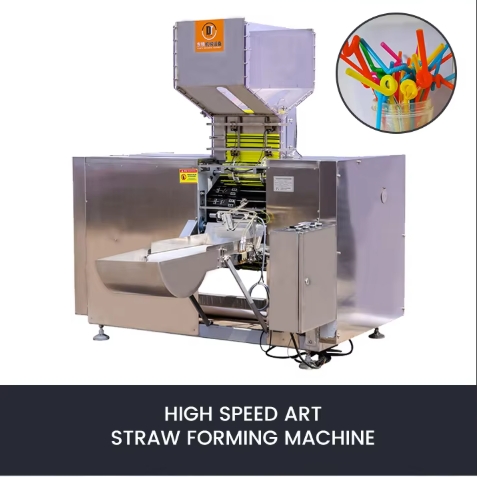
The customisation pattern is regional. Southeast Asian and Middle East buyers routinely need mould solutions tuned to local straw specifications, which is why mould compatibility, material specification and surface treatment have to be confirmed before order placement rather than after. Formats range from 3.8 mm U-shaped straws and 5 mm flexible straws through 6 mm high-speed straw bending to 12 mm pointed-tip and large-diameter art straw forming — each requiring its own mould set. Long-term continuous-run stability and full-set after-sales technical support for an overseas site are usually the deciding factors between two technically similar offers.
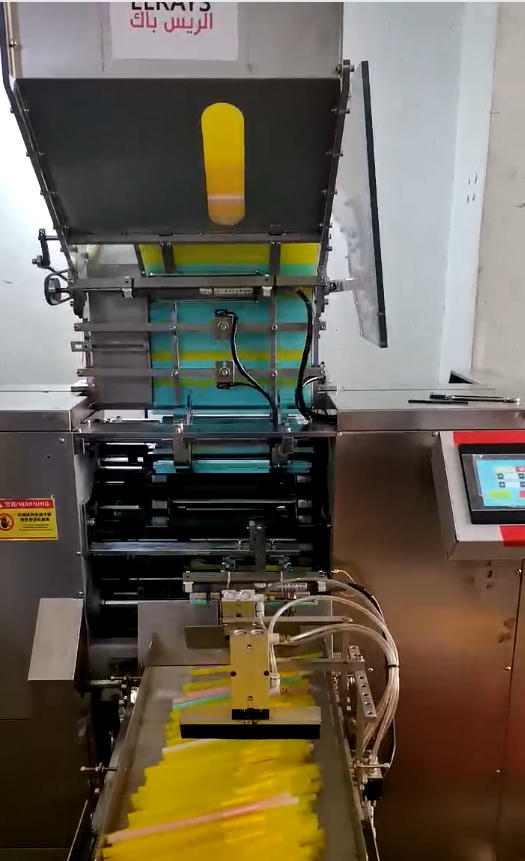
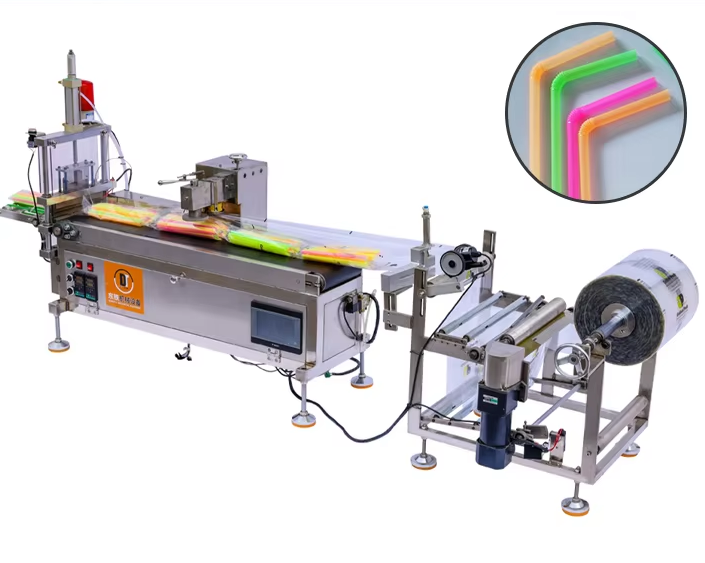
Line integration is the second common thread. A high-speed flexible straw forming machine normally runs as part of a wider setup with a feeder, sealing and cooling unit, packaging machine and conveyor system. For factories building a new production line or expanding capacity, downstream modules such as a fixed-quantity packaging system and an automatic stacking unit can be matched to build an integrated line.
FAQ
Does a high-speed flexible straw forming machine need CE marking to be exported to Southeast Asia or the Middle East?
CE marking is an EU market requirement tied to Machinery Directive 2006/42/EC and harmonized standards such as EN ISO 12100, which is the primary harmonized standard for the safety of machinery. It is not a global passport. For Southeast Asia and the Middle East, import documentation is set by the destination country, so the buyer’s importer or customs broker should confirm what is required. Dongtie’s documented certificate is a Chinese Utility Model Patent (certification No. 12166973, issued by CNIPA on 2020-12-18, valid until 2030-05-09). That certificate is mainly valid in China while the product can be sold worldwide — and it should never be presented as, or accepted as, a CE certificate.
Which compliance documents can a buyer verify before shipment?
Four categories are available on record. First, the Certificate of Utility Model Patent No. 12166973 covering Model DT-1200, with Patent No. ZL202020756632.1 for the core forming components. Second, a pre-delivery test run and functional verification, which is part of Dongtie’s factory inspection procedure. Third, factory inspection reports, which can be provided on demand. Fourth, machine-level technical data: rated power 5.5–6.5 kW, protection grade IP55, stainless steel construction, working pressure 1.500–6.000 MPa and working temperature 100–200 °C.
Can the machine be customised for different straw diameters and bend angles?
Yes. By changing the corresponding moulds, the machine can manufacture flexible straws with different diameters and bending angles, which supports diversified production. In practice this covers formats from small-diameter U-shaped straws and 5 mm flexible straws through 6 mm and 12 mm pointed-tip and decorative straw forming. Custom moulds are required for different straw diameters and bending shapes, and special standards apply to raw material specifications and surface treatment, so material compatibility and the mould solution should be confirmed before order placement.
What is the minimum order quantity and lead time?
The minimum order quantity is one set, and the standard lead time is 30 days. Monthly production capacity is 20 sets. Because mould solutions are customised, buyers should confirm the exact mould configuration and any downstream modules — such as a packaging system or stacking unit — before the lead time clock starts, so that the delivery date on the contract reflects the real scope of the order.
What after-sales support is included for an overseas installation?
After-sales services include installation and commissioning, remote technical support and spare parts supply. Remote video technical guidance is available for common faults, and on-site training can be arranged in Dongtie’s own straw production workshop, which is equipped with over 10 full production lines. Because warranty terms and response time are not fixed by default, buyers should confirm them and write them into the order before purchase. To start a documentation review, you can request the Dongtie catalogue and current lead time, or send a short list of the documents your customs broker requires — the usual starting point is the patent certificate, the pre-delivery test record and the machine specification sheet.
Conclusion: The Checklist That Survives an Audit
A compliance file for a high-speed flexible straw forming machine does not need to be thick. It needs to be traceable. Match every document to the exact model designation, name the issuer, state the jurisdiction honestly, and put an expiry date on the page. For the DT-1200, that means the Certificate of Utility Model Patent No. 12166973 with Patent No. ZL202020756632.1, issued by the China National Intellectual Property Administration and valid until 2030-05-09; a pre-delivery test run and functional verification; factory inspection reports on demand; nameplate specifications of 5.5–6.5 kW, IP55 and stainless steel construction; and after-sales terms covering installation, commissioning, remote support and spare parts, agreed before the order is placed.
For buyers in Southeast Asia and the Middle East, the decisive step is the first one: confirm with your importer or customs broker what your market actually requires for an import under HS code 84778090, then request precisely those documents. Suppliers who can answer that request with files rather than adjectives are the ones worth quoting against.
Next step: request the audit-ready document pack
Zhongshan Dongtie Machinery Co., Ltd. (DONGTIE MECHANICAL EQUIPMENT) can provide the patent certificate, machine specification sheet, pre-delivery test record and factory inspection report for the DT-1200 high-speed flexible straw forming machine, together with a quotation tailored to your straw diameter range and mould requirements.
Website: www.zsdtjx.com
Catalogue download: Dongtie product catalogue (PDF)
Contact: Quanhe Wu · Email: 843681276@qq.com · Tel / WhatsApp: +8613680252932
Address: 23-3/F, Xicheng Road, West District, Xiaolan Town, Zhongshan City, China
Have Questions or Need More Details?
Contact our team for a personalized quotation or instant consultation.
Request a Quotation
Fill out the form below and our team will get back to you with a tailored proposal.
WhatsApp Direct Chat
Prefer to chat in real-time? Message us on WhatsApp for instant assistance & quick answers.
- Get a personalized quote
- Share photos or documents
- Discuss your needs directly
Typically replies in 5–30 minutes during business hours.