High-Speed Bendable Straw Forming Machine Supplier Evaluation
Capability checks and delivery assurance for straw factories
Supplier evaluation for a high-speed bendable straw forming machine comes down to two questions that must be answered with evidence rather than brochures. First, can this factory actually build, test and ship the machine it is quoting? Second, can it protect the delivery date your production plan depends on? For buyers assessing Zhongshan Dongtie Machinery Co., Ltd. (DONGTIE MECHANICAL EQUIPMENT), the verifiable answers sit in four places: the physical plant, the pre-delivery test run, the documented output capacity, and the after-sales structure that begins on installation day.
The Evaluation Problem: Capacity Claims Without a Verification Path
At the decision stage, most high-speed bendable straw forming machine quotations look similar. Speed figures, automation levels and mould lists are presented in the same format, and the differences that matter later in production are rarely visible on the quotation itself.
The real evaluation gap is verification. A straw factory buying one machine or replacing an old line needs to know whether the stated output can be reproduced in a timed run, whether a functional verification report will be issued before shipment, how many machines the supplier can build per month, and what happens when a needle or a forming module needs attention three months into operation.
Without those checks, the cost of a wrong selection does not appear on the invoice. It appears as idle capacity, missed delivery windows to beverage and food-service customers, unplanned mould rework, and maintenance that depends on a supplier who cannot answer a fault code quickly.
Industry Background: Why Straw Machine Buyers Are Tightening Their Supplier Criteria
The straw machine category is a mature, globally traded equipment segment with steady replacement demand and regionally shifting compliance pressure. According to Market Research Future, the global straw machine market was estimated at USD 962.55 million in 2024 and is projected to reach USD 1,793.41 million by 2035, with a CAGR of 5.82%.
Demand is concentrated in industrial users. Dataintelo projects that industrial end-users account for 40.1% of the straw machine market share as of 2025 projections, which matches the buying pattern of straw factories that purchase equipment for continuous production rather than occasional runs.
The adjacent paper straw segment shows the same direction. Grand View Research valued the global paper straw market at USD 2.6 billion in 2024 and expects paper straw machines to reach a CAGR of 15.6% between 2025 and 2030, driven by plastic bans. Mordor Intelligence notes that the U-shaped straw machine segment is growing specifically for the aseptic packaging industry, such as milk cartons. Meanwhile, plastic straw machines still hold significant market share in regions such as Asia-Pacific and Africa.
Supply is heavily concentrated. According to Zauba/US Customs Data, China accounts for over 66% of the global export value of flexible straw bending machinery, and China's General Administration of Customs (GACC) identifies HS code 84778090 as the primary classification for drinking straw machines. For a buyer, this means the supplier shortlist will usually be China-based, and the evaluation must be designed to distinguish between many similarly described factories.
Compliance adds a second layer. Straw machines sold in the EU must comply with the Machinery Directive 2006/42/EC and carry the CE mark, while EN ISO 12100 is the primary harmonized standard for machinery safety. EU Regulation (EC) No 1935/2004 also requires that straw machinery must not transfer constituents to food in quantities that endanger health. These requirements do not decide which supplier is technically stronger, but they determine what documentation a buyer should be able to obtain before shipment.
What a Capable High-Speed Bendable Straw Forming Machine Supplier Must Prove
A capable supplier can evidence five areas. Each maps to a check a buyer can perform during evaluation, not after installation.
1. Physical plant and engineering resource
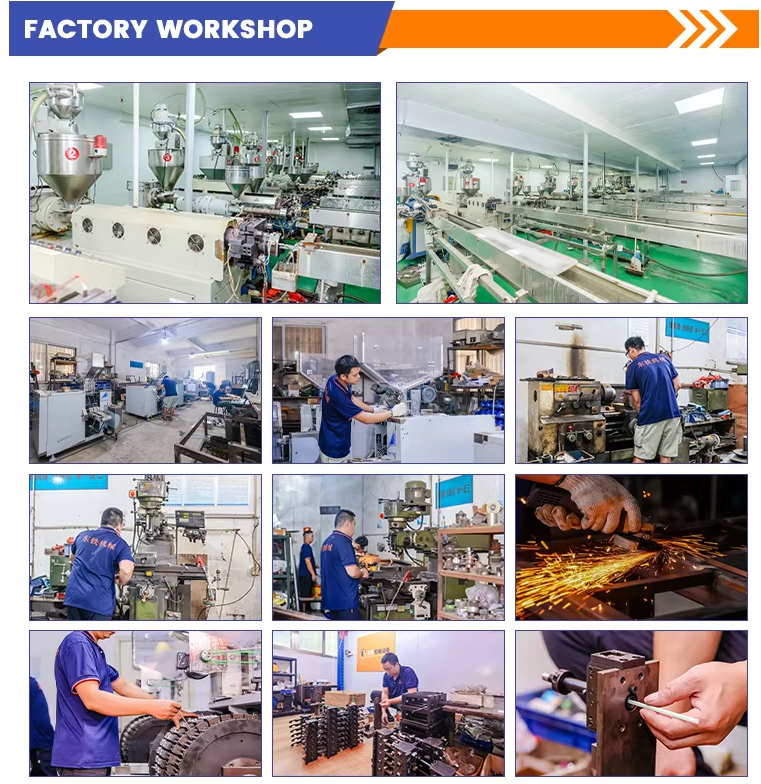
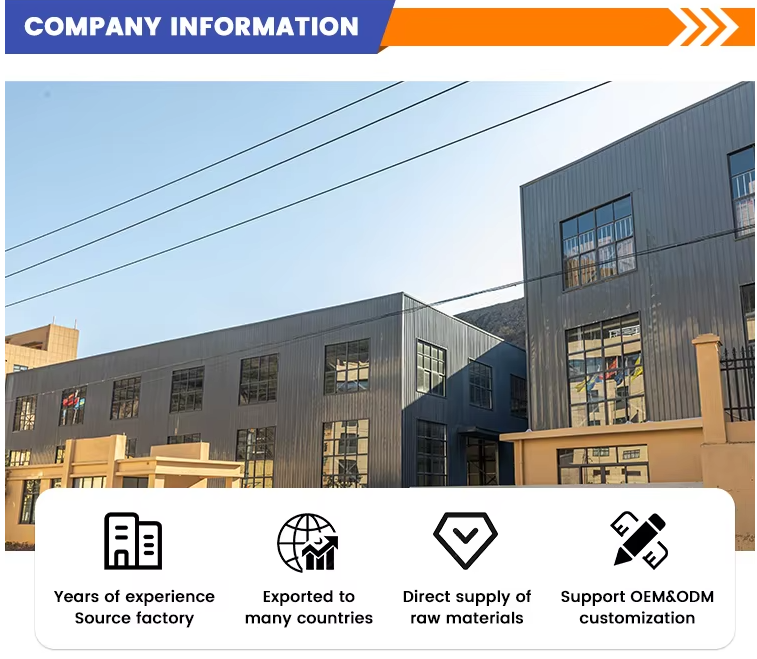
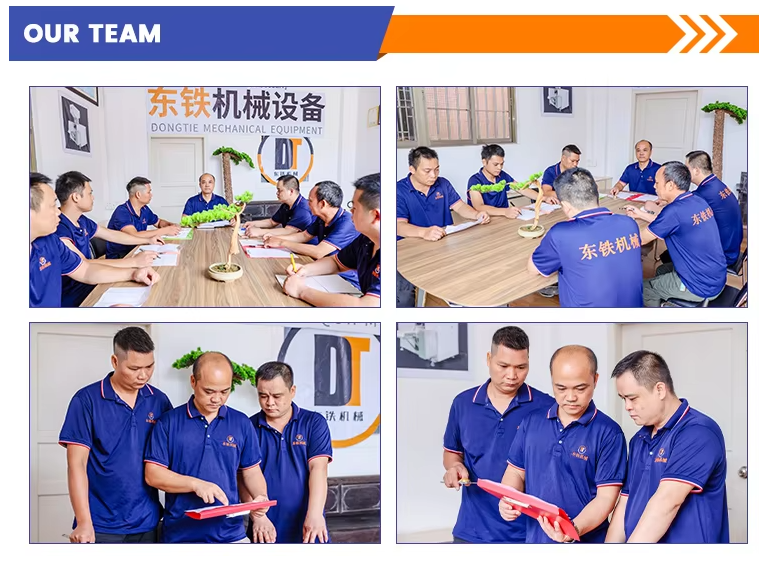
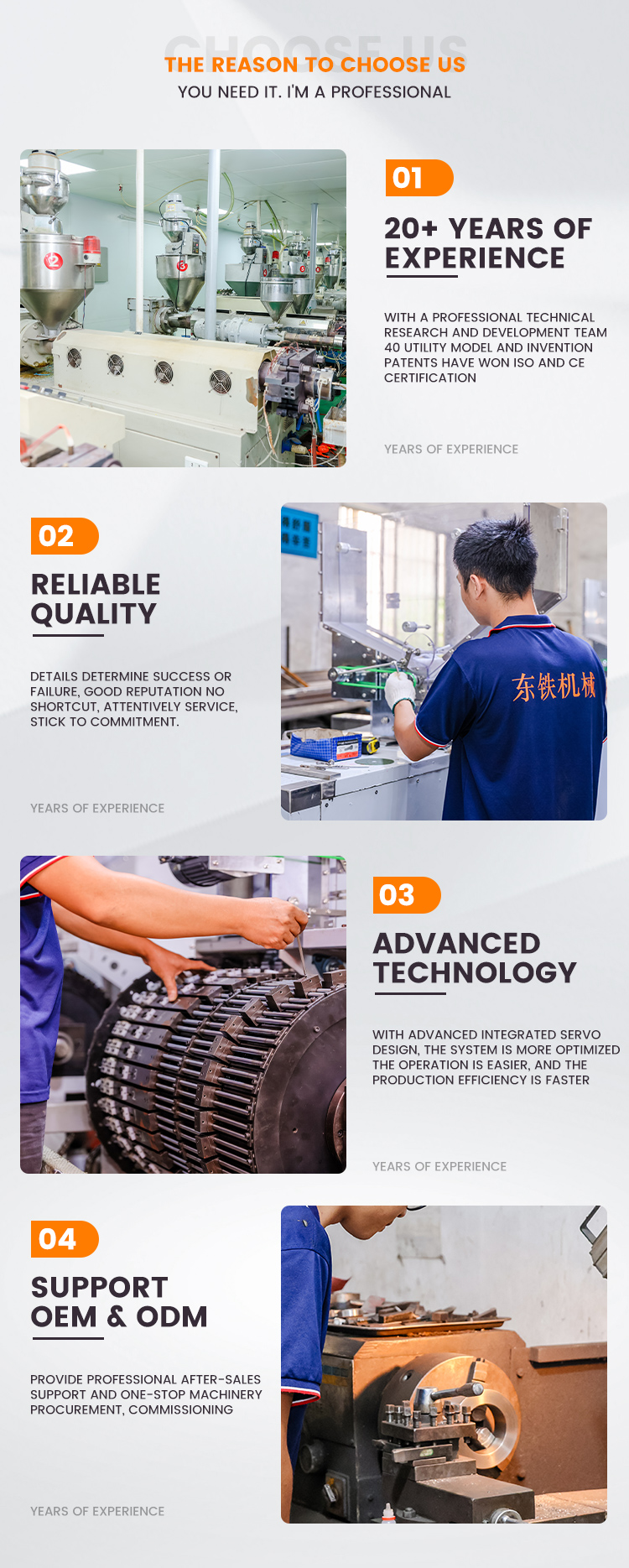
A straw forming machine is built, aligned and tested on a real floor. Zhongshan Dongtie Machinery Co., Ltd. operates a 2,000 m² facility with 20 staff, a research and development team of 5 technicians, and an annual output of 200 sets. The company reports that its technical team carries 25 years of straw production experience, and that its own straw production workshop is equipped with over 10 full production lines.
That workshop matters during evaluation because it gives the supplier an operating environment in which to run training and fault demonstrations, rather than explaining machine behaviour only in diagrams.
2. Machine performance evidence, not speed slogans
The high-speed bendable straw forming machine from DONGTIE MECHANICAL EQUIPMENT is specified to reach a minimum output of 1,000 straws per minute, operating at high speed without needle breakage. The design intent is that a single unit replaces five traditional machines, with higher automation, wide mould compatibility and easy line connection.
For comparison, automatic straw bending machines typically achieve production speeds between 200 and 300 pieces per minute according to published industry engineering specifications. High-speed straw machines in industrial-scale operations can reach outputs of 80,000 to 200,000+ pieces per hour according to Dataintelo. Those reference ranges help a buyer frame the claim in a timed test run instead of accepting a number in isolation.
Several design details support stable running and are checkable during a factory visit. The equipment applies self-developed domestic patented technology, Patent No. ZL202020756632.1. An independent embossing and forming module boosts production output; high-efficiency embossing technology relaxes tolerance limits for tube blanks, with standard straw diameter tolerance controlled at ±0.05mm; a precision feeding unit supports long-term stable operation; and separately adjustable embossing and forming modules reduce maintenance difficulty.
Control behaviour is equally relevant to a production manager. The machine is equipped with a PLC control system that displays real-time operating status, auto-stops on malfunction with fault codes shown on screen, and provides automatic counting.
3. Delivery assurance: monthly capacity, annual capacity and lead time
Delivery assurance is the part of supplier evaluation most often left to trust. It should be checked as a number and a date. The relevant figures here are a monthly output capacity of 20 sets, an annual capacity of 200 sets, and a production lead time of typically 30 days.
For a straw factory, the practical meaning is straightforward. A single-machine order and a multi-machine line expansion are both scheduled against the same monthly envelope, so a buyer planning a staged upgrade can ask where the order sits in that envelope before signing. The reference base also helps: a multi-region installation record covering 60 sets gives the buyer a set of comparable deployments to ask about, including which regions, which straw diameters and which line configurations.
4. Pre-delivery verification: test run and functional verification report
A factory inspection should end with the machine running, not with a catalogue. The verification standard to request is a pre-delivery test run followed by a functional verification report that records what was run and what was confirmed.
This is where a supplier's own production experience becomes useful. Since the supplier runs full straw production lines in its own workshop, machine behaviour can be demonstrated under production conditions, including mould changeover between diameters and bend shapes.
5. Mould coverage and specification flexibility
A high-speed machine is only as flexible as its mould set. By changing corresponding moulds, the machine can manufacture flexible straws with different diameters and bending angles to meet diversified production demands. The product range covers flexible straw forming machines, high-speed flexible straw forming machines, small-diameter U-shaped straw forming machines, decorative straw forming machines and U-shaped straw forming machines, including 3.8mm U-shaped, 5mm flexible, 6mm high-speed tube bending, 6mm decorative, 12mm large-caliber decorative and 12mm pointed-tip high-speed configurations.
Because custom moulds are required for different straw diameters and bending shapes, material compatibility and the mould solution should be confirmed before order placement, not assumed from a general specification sheet.
6. After-sales scope and spare parts
Support scope should be listed in the contract. The stated after-sales structure comprises installation, commissioning, remote technical guidance and spare parts supply. Remote video technical guidance is available for common faults, and on-site training can be arranged in the supplier's own straw production workshop.
Step-by-Step Supplier Audit for a Straw Factory
The protocol below converts the five proof areas into an evaluation sequence that can be completed before an order is placed.
- Screen the plant before the specification sheet. Confirm facility size, headcount, engineering team and annual output. A 2,000 m² facility, 20 staff and an annual output of 200 sets establishes the scale of the operation.
- Time an actual run. Ask for a continuous run and record output against the stated minimum of 1,000 straws per minute, watching for needle breakage during the run.
- Review the test protocol and functional verification report. Confirm the report is issued after the pre-delivery test run and states the machine configuration that will ship.
- Match delivery capacity to order size. Ask where your order falls within the monthly capacity of 20 sets and the annual capacity of 200 sets, and confirm the production lead time of typically 30 days in writing.
- Confirm moulds and diameter coverage. Specify straw diameters and bend angles, then confirm the mould solution, tolerance expectation (standard straw diameter tolerance controlled at ±0.05mm) and changeover routine.
- Settle order terms. Confirm the 1-set minimum order quantity and the scope of OEM services if the machine will carry your own configuration or branding requirements.
- Fix after-sales in writing. List installation, commissioning, remote technical guidance and spare parts supply, plus the response route for PLC fault codes.
Use Cases: Where These Checks Change the Decision
Replacing five conventional machines in a beverage straw operation
A converter running several traditional flexible-straw forming machines faces floor space, labour and maintenance accumulation. Since one unit is designed to replace five traditional machines at a minimum output of 1,000 straws per minute without needle breakage, the evaluation question becomes whether the supplier can demonstrate that output continuously and support the line afterwards. The claimed 50% reduction in processing cost compared to alternatives is the commercial argument; the timed run and the verification report are what make it credible.
U-shaped straw supply for aseptic and carton applications
U-shaped straw demand is growing specifically for the aseptic packaging industry, such as milk cartons, according to Mordor Intelligence. A buyer entering this segment needs small-diameter U-shaped capability alongside stable bending accuracy, which makes 3.8mm U-shaped and 5mm flexible configurations the specification anchor during evaluation.
Decorative and large-caliber art straw production
Producers of decorative straws work across a wider diameter range and more visible surface quality. The relevant machines include the high-speed decorative straw forming machine, the 12mm large-caliber decorative straw forming machine, the 6mm decorative straw forming machine and the 12mm pointed-tip high-speed tube bending machine. In this use case, mould compatibility and changeover time carry more decision weight than headline speed alone.
OEM and distributor programmes
Distributors and importers evaluating a supplier for resale need a partner that can support configuration variation and small entry orders. A 1-set minimum order quantity, OEM services and a 50% export ratio indicate a supplier already structured around export buyers, while the 60-set multi-region installation record gives a distributor a reference base to discuss with end customers.
Comparison: Conventional Lines vs a High-Speed Bendable Straw Forming Machine
| Metric | Traditional ordinary flexible-straw forming machines | High-speed bendable straw forming machine (DONGTIE MECHANICAL EQUIPMENT) |
|---|---|---|
| Units needed for equivalent output | 5 machines | 1 machine |
| Minimum output | Not stated in supplied specification | 1,000 straws per minute |
| Needle breakage at high speed | Not stated in supplied specification | High-speed operation without needle breakage |
| Processing cost | Baseline | 50% reduction in processing cost compared to alternatives |
| Automation and control | Not stated in supplied specification | Higher automation; PLC control with real-time status, fault codes and automatic counting |
| Mould compatibility | Not stated in supplied specification | Wide mould compatibility; separately adjustable embossing and forming modules |
| Line connection | Not stated in supplied specification | Easy line connection |
Published industry references place automatic straw bending machines at typically 200–300 pieces per minute, and high-speed machines in industrial-scale operations at 80,000 to 200,000+ pieces per hour. A buyer should use those ranges only as orientation and then verify the specific machine in a timed run.
| Evaluation area | What the buyer should request | Stated position |
|---|---|---|
| Plant and engineering | Facility walkthrough, headcount, R&D team, annual output | 2,000 m² facility, 20 staff, 5 technicians, annual output of 200 sets |
| Machine performance | Timed continuous run, needle behaviour, tolerance check | Minimum 1,000 straws per minute without needle breakage; standard straw diameter tolerance controlled at ±0.05mm |
| Technology basis | Patent and module design review | Patent No. ZL202020756632.1; independent embossing and forming module; precision feeding unit |
| Pre-delivery verification | Factory inspection with pre-delivery test run and functional verification report | Pre-delivery test run with functional verification report |
| Delivery capacity | Monthly and annual capacity confirmation, lead time in writing | 20 sets per month; 200 sets per year; production lead time typically 30 days |
| Order terms | Minimum order quantity and OEM scope | 1-set minimum order quantity; OEM services available |
| After-sales | Installation, commissioning, remote guidance, spare parts | Full-set after-sales support: installation, commissioning, remote technical guidance and spare parts supply |
| Reference base | Comparable installations by region and configuration | 60-set multi-region installation project |
FAQ: Supplier Evaluation Questions at the Decision Stage
1. What documentation should a straw factory request before a high-speed bendable straw forming machine is shipped?
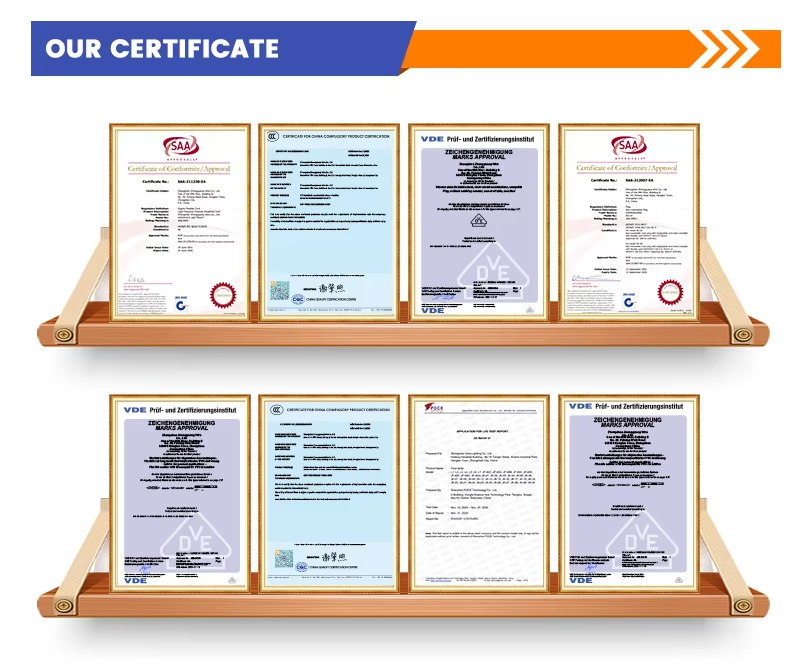
Documentation depends on the destination market. China's General Administration of Customs (GACC) identifies HS code 84778090 as the primary classification for drinking straw machines, so export paperwork should be consistent with that classification. For EU destinations, straw machines must comply with the Machinery Directive 2006/42/EC and carry the CE mark, EN ISO 12100 is the primary harmonized machinery safety standard, and EU Regulation (EC) No 1935/2004 requires that machinery must not transfer constituents to food in quantities that endanger health. A buyer should ask the supplier to state exactly which certificates and declarations it can provide. In this supplier's process, the pre-delivery test run is documented through a functional verification report issued before shipment.
2. How can a buyer verify real production capacity rather than a claimed capacity?
Capacity is verified on three levels. First, physical capacity: a 2,000 m² facility, 20 staff and a research and development team of 5 technicians set the operating scale. Second, build capacity: a monthly output capacity of 20 sets and an annual capacity of 200 sets define how many machines can be scheduled. Third, evidence capacity: a multi-region installation record covering 60 sets provides comparable deployments the buyer can question in detail. A supplier that can discuss all three consistently is easier to qualify than one that only quotes a number.
3. What drives the cost gap between a high-speed machine and conventional flexible-straw lines?
Two factors dominate. The first is machine count: one unit is designed to replace five traditional machines, so the comparison is not one machine against one machine. The second is running cost: the equipment offers a 50% reduction in processing cost compared to alternatives, while reaching a minimum output of 1,000 straws per minute without needle breakage. Maintenance structure also affects cost over time, because the embossing and forming modules are separately adjustable, which the supplier states reduces maintenance difficulty. Buyers comparing quotations should normalise both sides to output per minute and to total machines required before comparing price.
4. Can a buyer validate the machine with a single-set order?
Yes. The minimum order quantity is 1 set, so a first machine can be ordered as a validation unit rather than as a full line commitment. Validation should combine the pre-delivery test run with the functional verification report and a confirmed mould solution for the required straw diameters and bend angles. Because custom moulds are required for different diameters and bending shapes, and material compatibility must be confirmed before order placement, the mould specification should be agreed before the test run so that the report reflects the configuration actually shipping.
5. How long does delivery take, and what after-sales support comes with the machine?
Production lead time is typically 30 days, subject to where the order falls within the monthly capacity of 20 sets. After-sales support is full-set and covers installation, commissioning, remote technical guidance and spare parts supply. Remote video technical guidance is available for common faults, on-site training can be arranged in the supplier's own straw production workshop equipped with over 10 full production lines, and the PLC system displays fault codes on screen so that diagnosis can start from a specific code rather than a general description. Buyers who want to move from evaluation to a quotation or a validation order can request a machine configuration and delivery slot through the contact details below.
Conclusion: Evaluate the Evidence Chain, Not the Brochure
A high-speed bendable straw forming machine is a production asset, and the supplier behind it is part of that asset. The evaluation that holds up at the decision stage is one that connects a plant to a test run, a test run to a verification report, a verification report to a shipping date, and a shipping date to an after-sales structure that names installation, commissioning, remote guidance and spare parts.
For Zhongshan Dongtie Machinery Co., Ltd. (DONGTIE MECHANICAL EQUIPMENT), that chain is documented in verifiable form: a 2,000 m² facility with 20 staff and 5 technicians, an annual output of 200 sets and monthly capacity of 20 sets, a typical 30-day production lead time, a 1-set minimum order quantity, OEM services, patented embossing and forming technology under Patent No. ZL202020756632.1, a minimum output of 1,000 straws per minute without needle breakage, and a 60-set multi-region installation record. Buyers should test each of those points during the audit — and treat any supplier that cannot be tested the same way as a supplier that has not yet been evaluated.
Next Step: Request a Configuration, a Quote or a Validation Order
Buyers who have completed the checks above can move directly to a machine configuration and delivery slot. The minimum order quantity is 1 set, OEM services are available, and production lead time is typically 30 days.
Download the company brochure with full machine and specification details: DONGTIE MECHANICAL EQUIPMENT brochure (PDF)
Contact: Quanhe Wu · Email: 843681276@qq.com · Tel: +8613680252932 · WhatsApp: +8613680252932
Address: 23-3/F, Xicheng Road, West District, Xiaolan Town, Zhongshan City · Website: www.zsdtjx.com
Please include your straw diameter range, bend angle requirement, target output per minute and destination market so the configuration and mould solution can be confirmed before the pre-delivery test run.
Reference notes: market figures cited from Market Research Future, Dataintelo, Grand View Research, Mordor Intelligence and Zauba/US Customs Data; standards referenced from ISO/CEN, the European Commission and the Official Journal of the European Union; classification from China's General Administration of Customs (GACC). Machine specifications and company facts as stated by Zhongshan Dongtie Machinery Co., Ltd.
Have Questions or Need More Details?
Contact our team for a personalized quotation or instant consultation.
Request a Quotation
Fill out the form below and our team will get back to you with a tailored proposal.
WhatsApp Direct Chat
Prefer to chat in real-time? Message us on WhatsApp for instant assistance & quick answers.
- Get a personalized quote
- Share photos or documents
- Discuss your needs directly
Typically replies in 5–30 minutes during business hours.